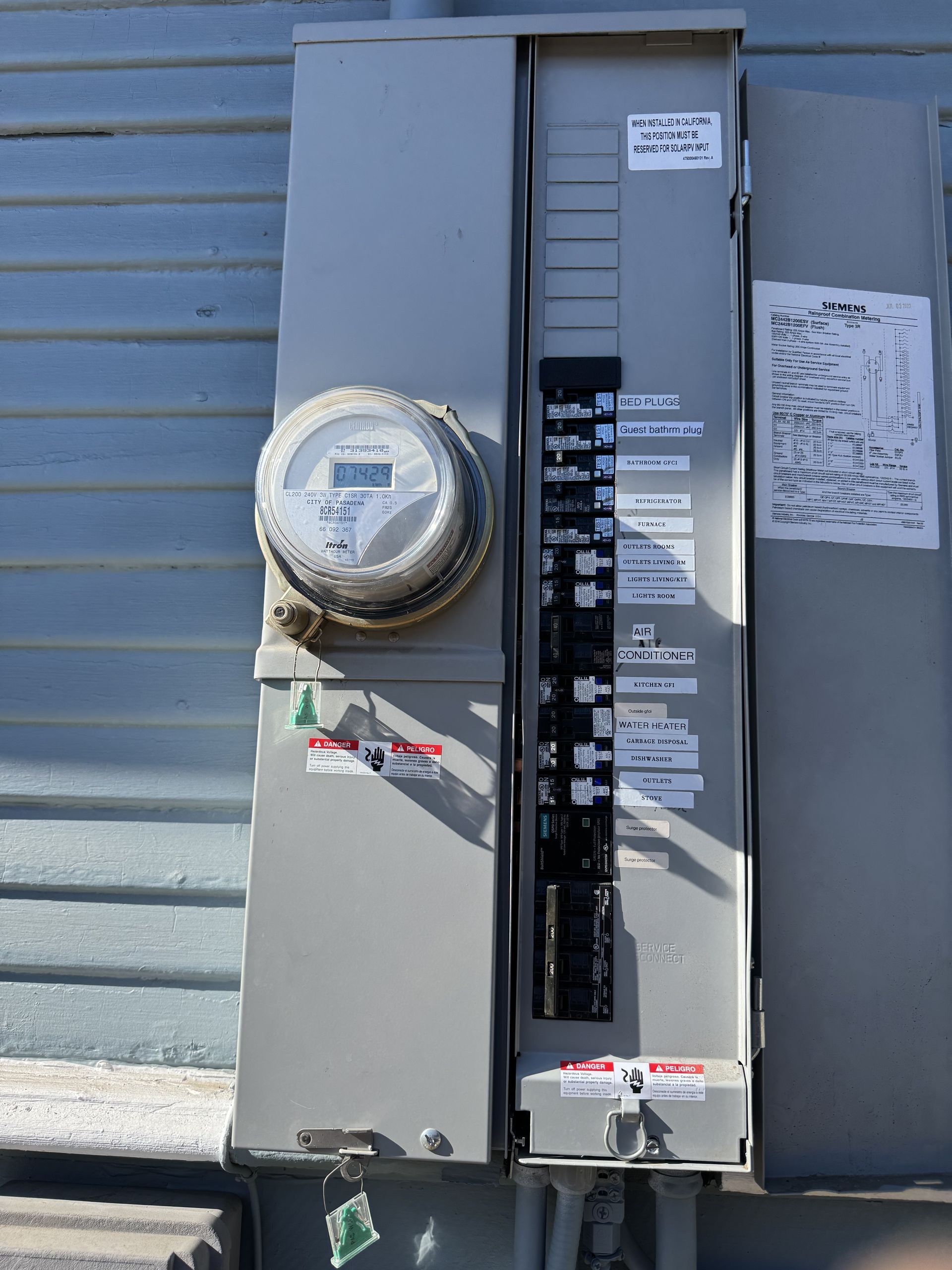
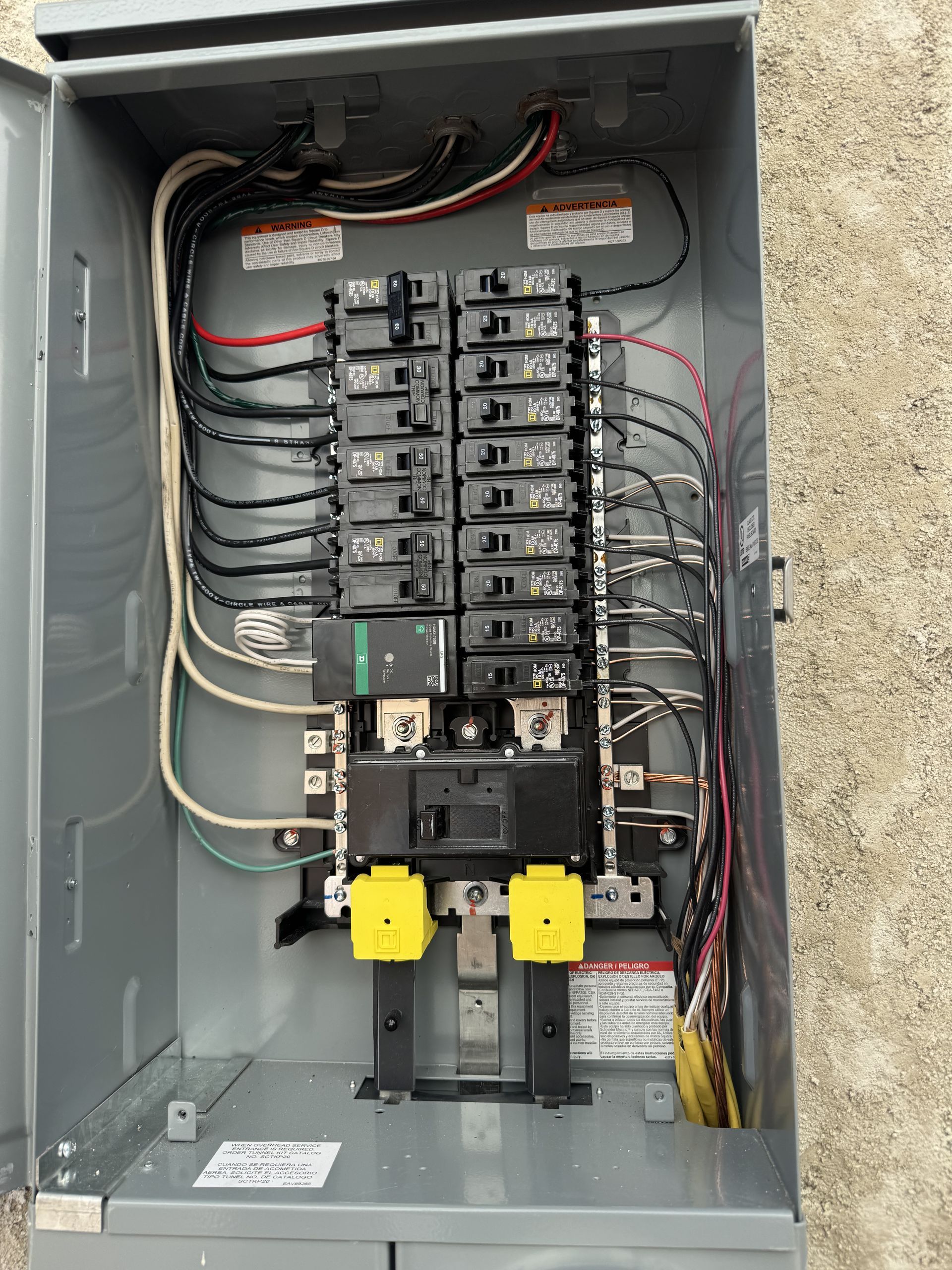
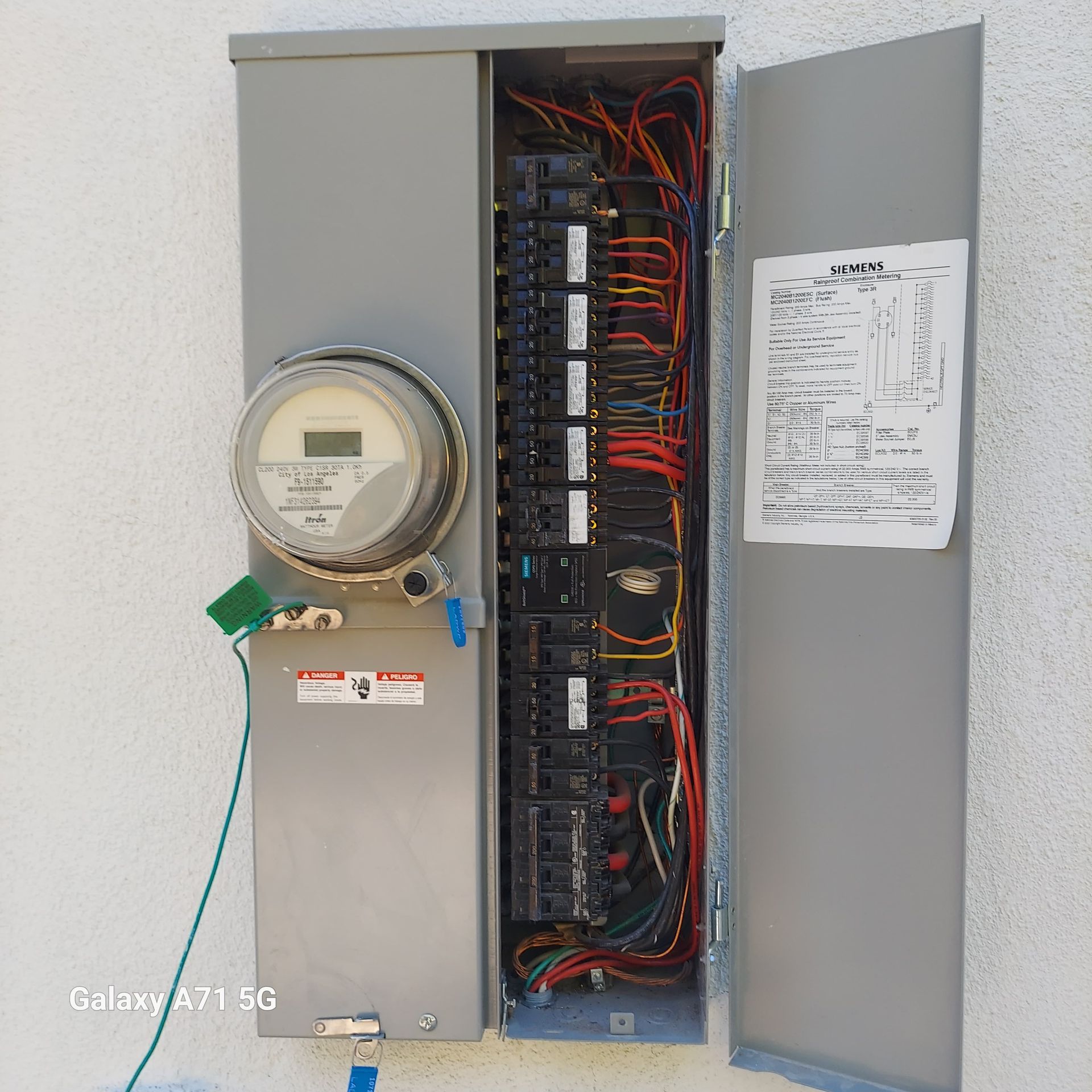
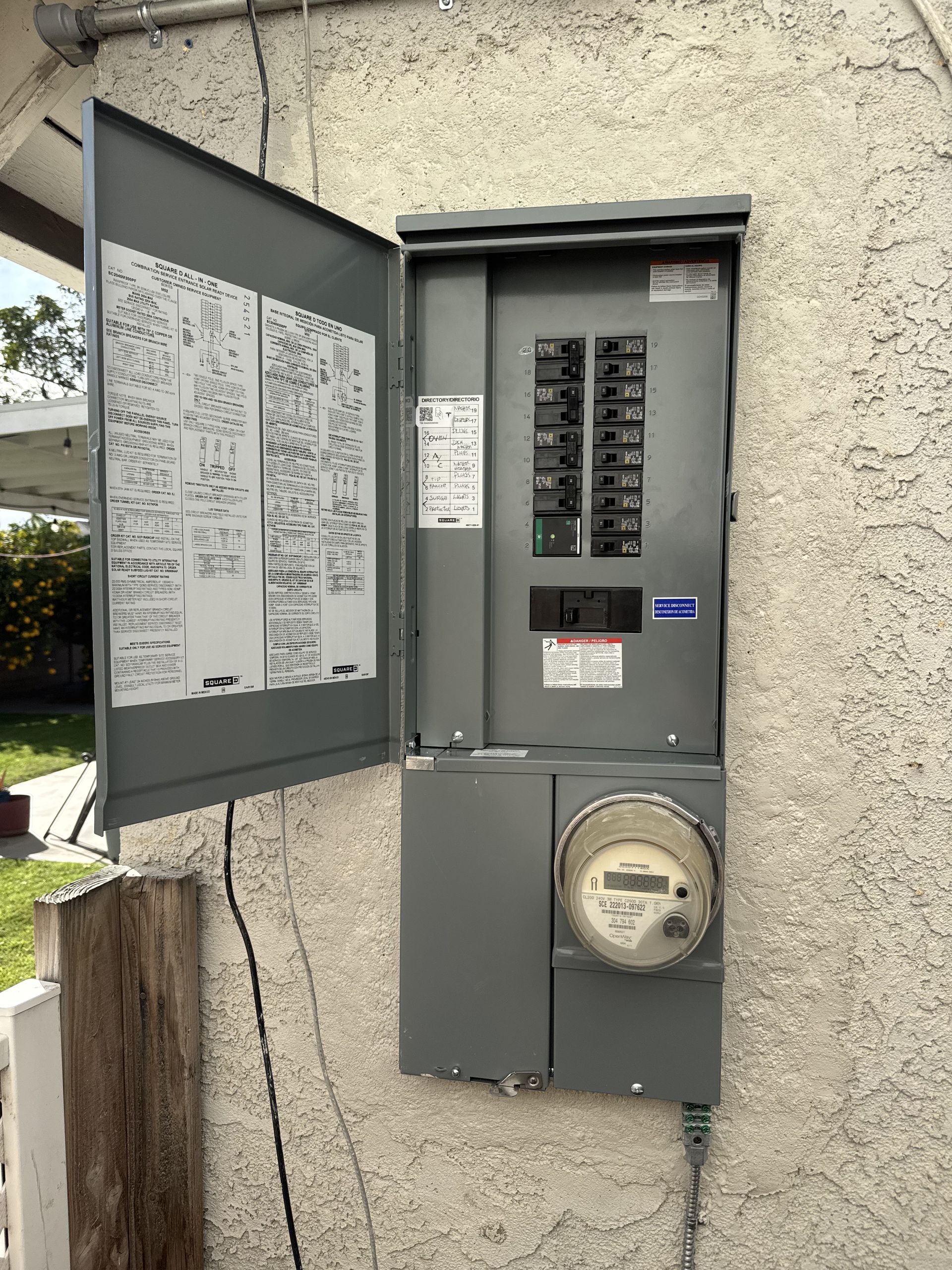
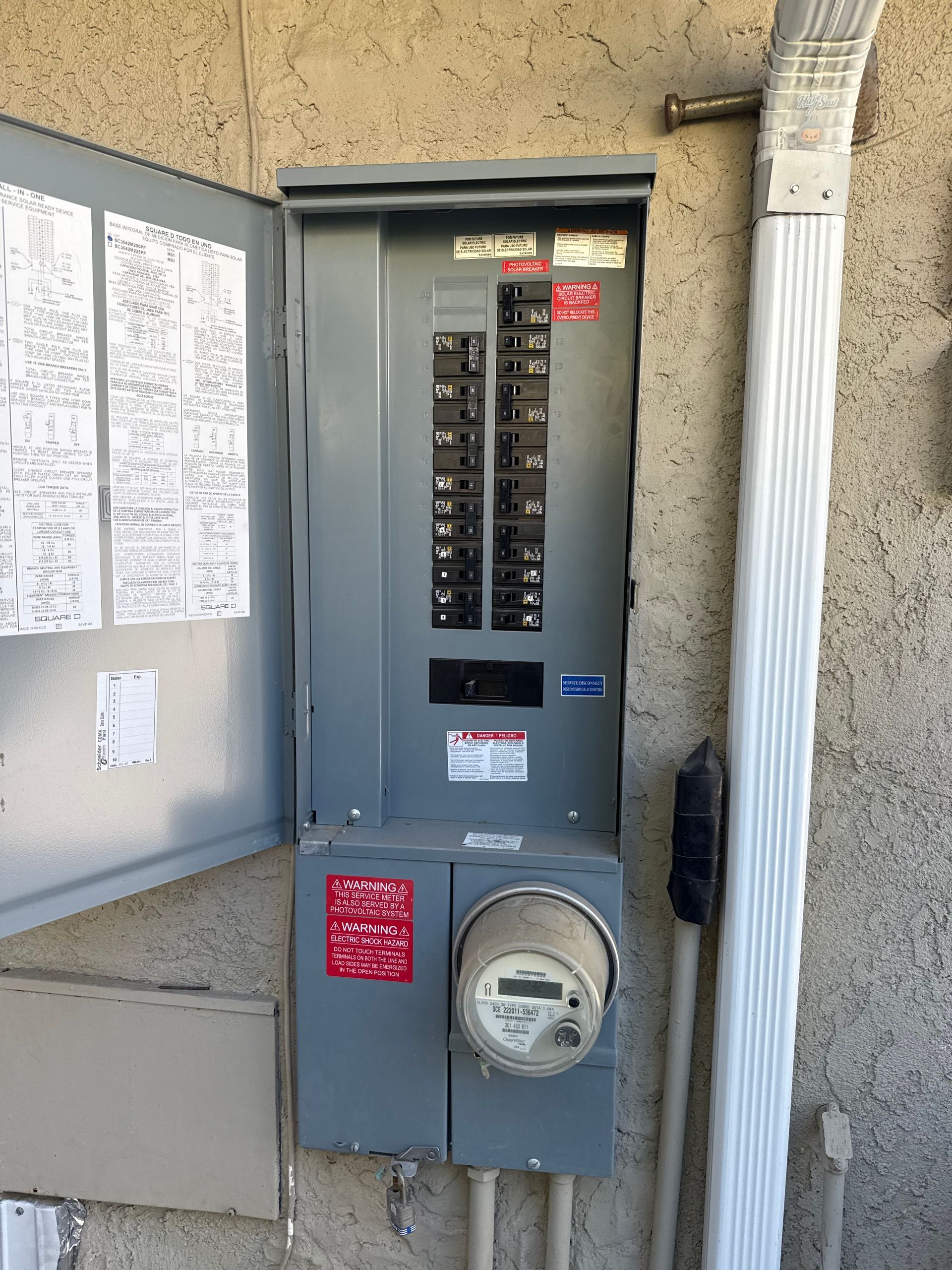
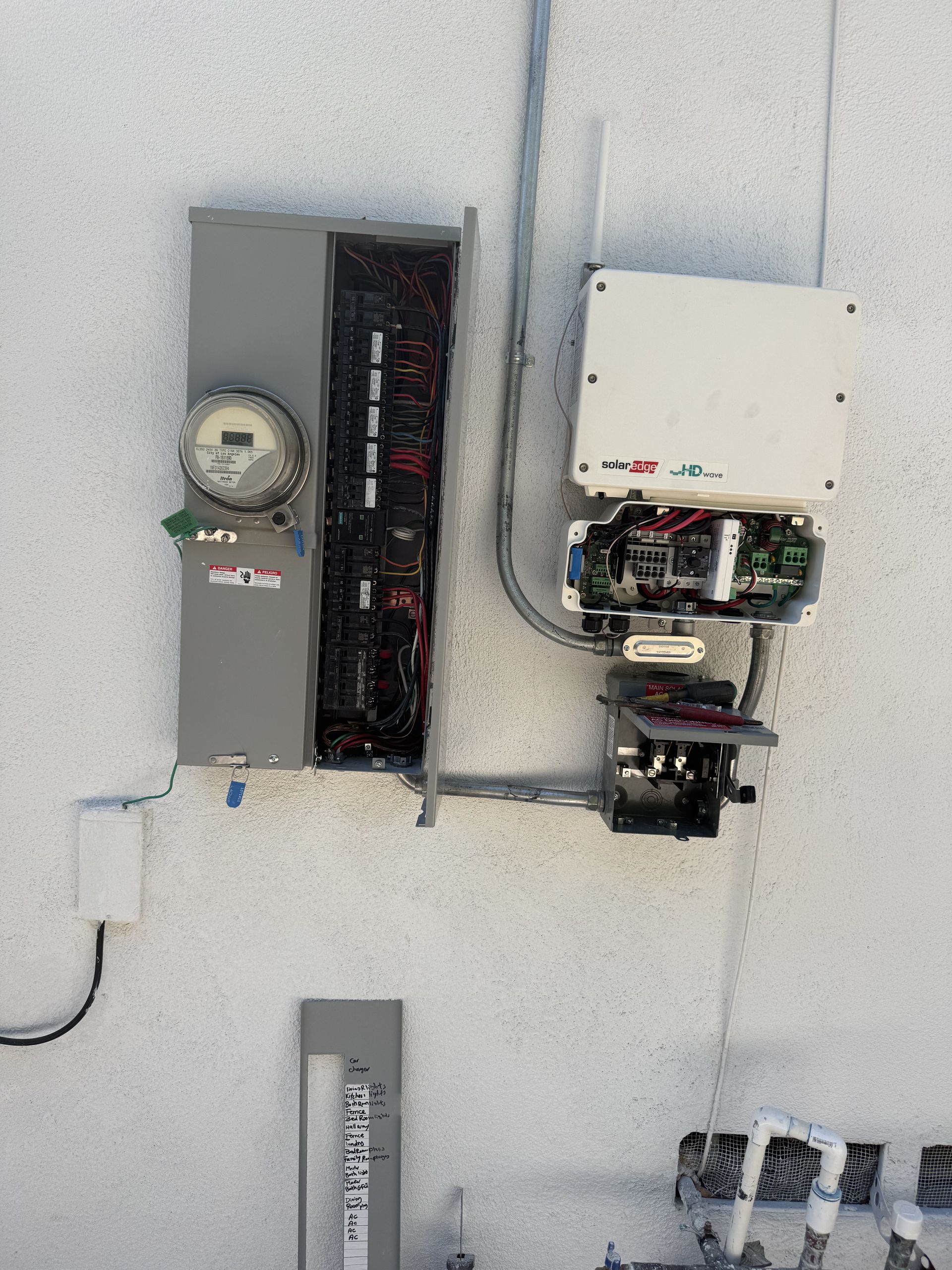
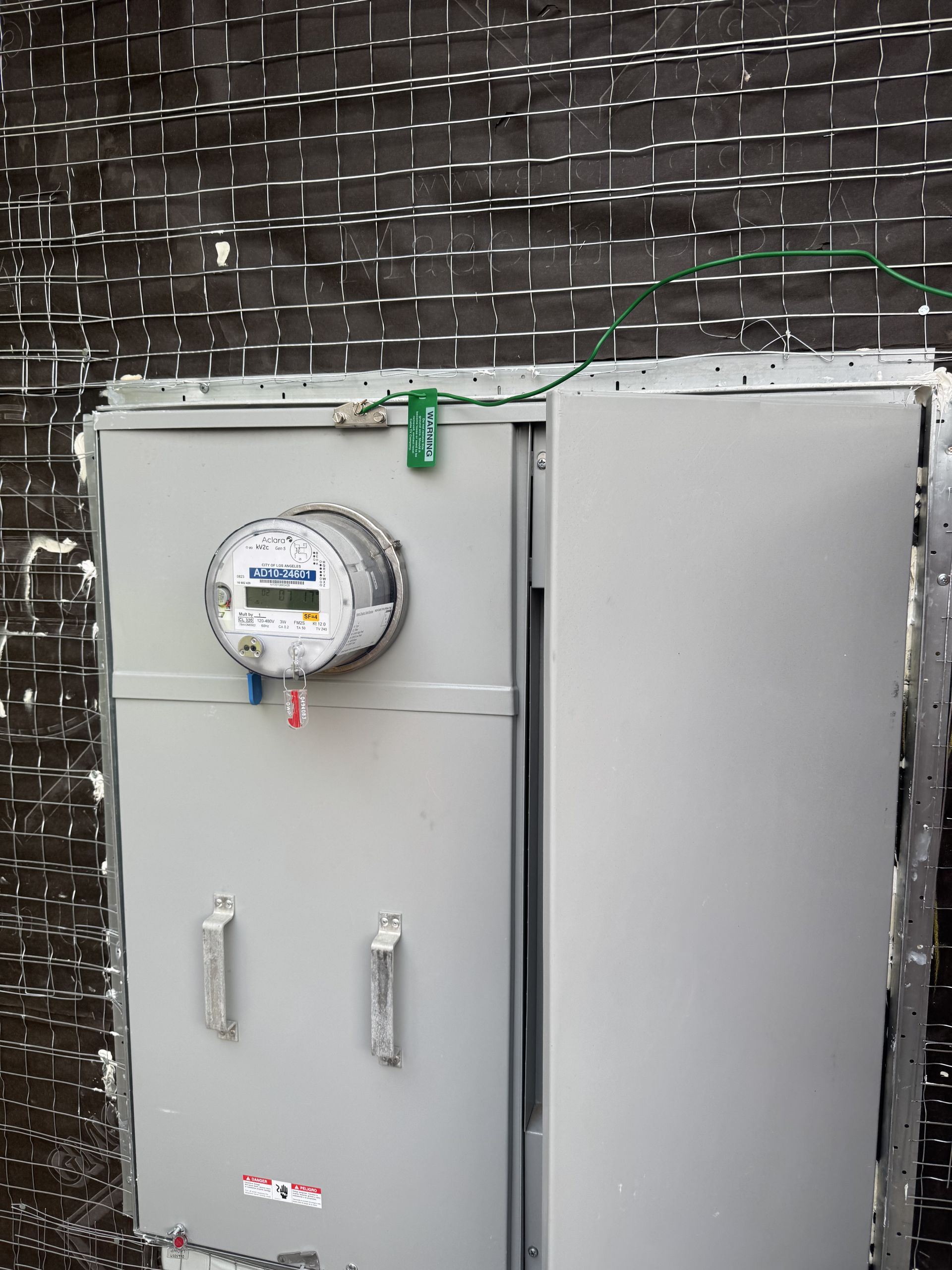
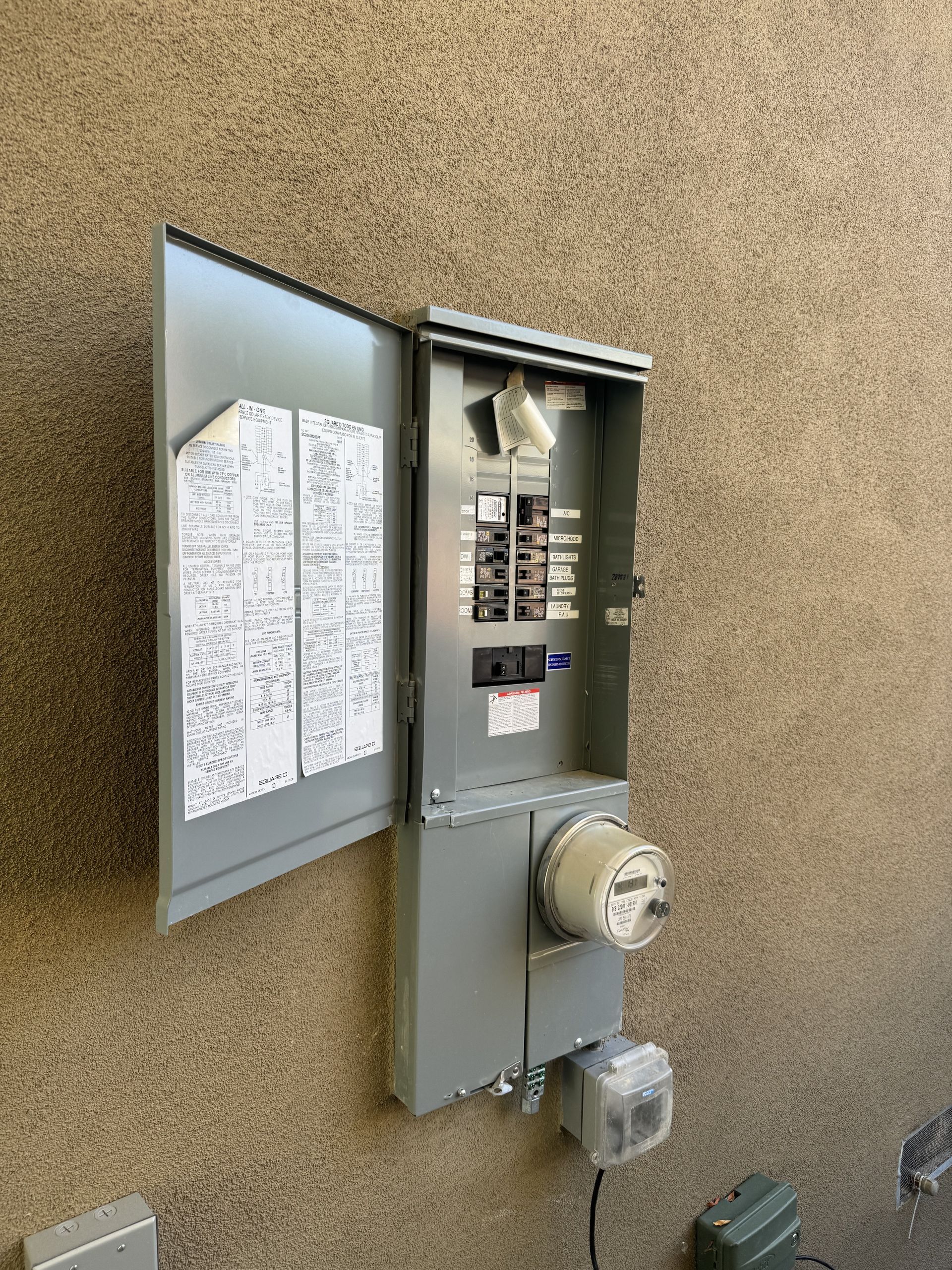
LED Guys is a licensed C10 electrical contractor specializing in Zinsco, GTE-Sylvania, and Federal Pacific panel replacements throughout Los Angeles and the San Fernando Valley. We handle the LADBS Counter Plan Check permit, coordinate the LADWP power disconnect, and assess aluminum branch circuit wiring on every job — most replacements complete in a single day.
Zinsco panels, and the identical panels sold under the GTE-Sylvania name after Sylvania acquired Zinsco in 1973, were manufactured with an aluminum alloy bus bar. The circuit breakers clip onto this bus bar to make electrical contact. Over time — accelerated by heat cycling from normal electrical loads — corrosion develops at the interface between the breaker clip and the aluminum bus. The corrosion is not just cosmetic: it causes the breaker clip to arc at the connection point, generating localized heat that progressively welds the breaker to the bus bar.
A welded breaker cannot trip. When a circuit overloads or shorts, the breaker's job is to interrupt current before the wiring overheats to ignition temperature. A Zinsco breaker welded to its bus bar fails at exactly this moment. In many documented cases, the breaker handle moves to the off position while the internal contacts remain closed — the switch looks tripped, but current is still flowing through the overloaded circuit. This failure mode is not detectable by visual inspection without removing the breaker.
Field testing by independent electrical engineers and home inspection organizations has documented a significant percentage of Zinsco breakers in service today that fail to trip under overload conditions. The U.S. Consumer Product Safety Commission has separately issued warnings on Federal Pacific Stab-Lok panels — the other dominant fire-hazard panel brand common in Los Angeles homes — which suffer from a different but equally serious flaw: the Stab-Lok bus clip geometry allows breakers to appear fully seated while not making reliable electrical contact, causing failure to trip under overload, particularly in 240V double-pole circuits.
Neither Zinsco nor Federal Pacific breakers are manufactured today. No listed replacement breakers exist that are compatible with the original bus bars. The only reliable remediation for either panel type is complete panel replacement.
The San Fernando Valley — and greater Los Angeles broadly — experienced its largest residential growth surge between 1948 and 1968, when developers platted thousands of ranch-style homes across the central Valley floor and surrounding communities. The neighborhoods now known as Chandler Estates and Midvale Estates in Los Angeles, and comparable tracts throughout North Hollywood, Sherman Oaks, Reseda, and Encino, were largely built during this period. Nearly every home built between 1960 and 1975 in this era received a 100-amp electrical service. The panel brands installed during those years were Federal Pacific Electric Stab-Lok and Zinsco, sometimes labeled Sylvania or GTE-Sylvania after the 1973 acquisition. Both are now recognized fire hazards.
Many Los Angeles homeowners first learn about these panels during a refinancing appraisal, a home inspection ahead of a sale, or when their insurance carrier requests documentation before renewing a policy. Homeowner insurers operating in California have increasingly flagged Zinsco and Federal Pacific panels in underwriting guidelines. Some carriers decline to issue new policies on homes with these panels; others issue coverage with an exclusion for fire damage originating at the panel; still others require a signed letter from a licensed electrician documenting the panel condition and a timeline for replacement.
A second problem common in Los Angeles homes built between 1965 and 1973 is aluminum branch circuit wiring. During a copper shortage in the mid-1960s, builders substituted aluminum for 15A and 20A branch circuits throughout the house. Aluminum expands and contracts at a significantly different rate than the copper terminals at outlets, switches, and breaker connections it was paired with. Over decades of thermal cycling, these terminations loosen. Loose aluminum connections arc and generate heat — the same mechanism that causes house fires. The combination of a Zinsco panel and aluminum branch wiring, which often appears together in homes built during the 1965–1973 overlap period, represents a compounded hazard that needs to be addressed systematically.
From the first call to the LADBS final sign-off — four steps with one point of contact throughout.
Jorge visits your Los Angeles home, identifies the panel brand and condition, checks for aluminum branch circuit wiring at the panel, and provides a written flat-rate quote. No hidden fees, no overtime clauses.
We file the Counter Plan Check permit application at LADBS — 201 N. Figueroa Street — and coordinate the LADWP power disconnect appointment. Your installation date is confirmed with all approvals in hand before we schedule.
The crew removes the Zinsco or Sylvania panel, installs your new 200A Square D, Siemens, or Eaton panel, and reconnects every circuit. Aluminum wiring terminations at the breaker terminals are addressed during reconnection. Power is restored the same day.
We schedule and attend the LADBS electrical inspection, get the final city sign-off, and deliver your permit documentation. Insurance carriers requesting proof of replacement receive the completed permit sign-off as their documentation.
During the copper shortage of the mid-1960s, builders across the San Fernando Valley — including in the Chandler Estates and Midvale Estates tracts of Los Angeles — substituted aluminum conductors for the 15A and 20A branch circuits that supply outlets and switches throughout the house. The change was accepted by building codes at the time. The problem emerged over years of use: aluminum expands roughly 40% more than copper under heat, and contracts similarly when it cools. Every time current flows through an aluminum wire, it heats and expands; when the load stops, it contracts. Over hundreds of thermal cycles, the aluminum conductor works loose at the terminal screws on outlets, switches, and breaker terminals.
A loose aluminum connection arcs across the gap between conductor and terminal. Arcing generates temperatures well above the ignition point of wood framing and insulation. Homes with aluminum branch wiring and no remediation have a significantly higher incidence of electrical fire than equivalent homes with copper wiring — a fact documented by the CPSC and the Electrical Safety Foundation International. The problem is compounded in homes where aluminum circuits were terminated with standard copper-rated devices, rather than the CO/ALR-rated outlets and switches required by NEC 2011 and later for aluminum conductors.
LED Guys identifies aluminum branch circuit wiring in every pre-1975 Los Angeles home we work on. When we replace a Zinsco or Federal Pacific panel, we inspect the wiring at every breaker terminal during reconnection. If aluminum wiring is present, we recommend the appropriate remediation based on its condition: pigtailing each device with approved AlumiConn or equivalent listed copper-to-aluminum connectors, replacing outlets and switches with CO/ALR-rated devices, or full rewiring of affected circuits in cases where the insulation condition warrants it.
AlumiConn or Ideal 65 purple wire connectors join a short copper pigtail to the aluminum conductor. The copper pigtail terminates at the device. Listed for aluminum-to-copper connections, prevents the galvanic corrosion that causes loose terminations.
CO/ALR (copper-aluminum revised) rated outlets and switches are designed for direct connection to aluminum conductors. Required by NEC 2011 for aluminum circuits. Can be used in place of pigtailing where the existing wire insulation is in good condition.
Where aluminum insulation has deteriorated, or where circuits run through areas that are accessible during other renovation work, replacing the aluminum conductors with copper is the most complete solution. Scope and cost depend on accessibility and circuit count.
Zinsco and Federal Pacific panels often show no obvious symptoms until a fault occurs. These are the signals that tell you to call immediately.
The panel brand alone is sufficient reason to schedule a replacement. If the label on your panel interior or the breakers reads Zinsco, Sylvania, or GTE-Sylvania, the bus bar and breaker design are the same regardless of age or apparent condition. The failure mode is inherent to the design, not just to aged or worn-out units.
In a properly functioning modern panel, breakers snap firmly into place on the bus bar. Zinsco breakers that have begun to corrode at the bus bar connection feel loose or require unusual force to reset. A breaker that does not click firmly into position is not making reliable electrical contact and should be treated as a failed breaker, not reset and ignored.
Heat and burning odors near the electrical panel are a fire emergency and require immediate attention from a licensed electrician. Both Zinsco aluminum bus corrosion and loose aluminum branch circuit connections generate heat before reaching failure. Do not ignore warmth or discoloration on or around the panel door.
This is the signature failure of a welded Zinsco breaker. If you trip a breaker and the lights or outlets on that circuit remain live, the breaker handle has moved but the internal contacts have not opened. This circuit has no protection. Do not reset the breaker — call (818) 588-7819.
If your homeowner's insurer has requested documentation of your panel, issued a notice of non-renewal citing the panel type, or conditioned coverage on replacement, treat it as time-sensitive. Insurers underwriting in Los Angeles have increasingly flagged Zinsco and Federal Pacific panels because their actuarial data reflects elevated fire loss rates from these panel types.
During a home sale, buyers' inspectors routinely flag Zinsco and Federal Pacific panels as requiring replacement or further evaluation by a licensed electrician. A flag in a home inspection report almost always becomes a buyer contingency. If your panel was flagged during a sale — whether you are buying or selling — replacement documentation from a C10 licensed contractor is the standard response.
A sample of electrical panel replacements and service upgrades completed by LED Guys across Los Angeles and the San Fernando Valley.
Real feedback from homeowners and business owners across Los Angeles who trusted LED Guys with their electrical panel and lighting projects.
“I recently hired Jorge to install LED strip lights for my custom cabinets, and I couldn’t be happier. Professional, punctual, and incredibly skilled. The wiring was neatly hidden and the setup works seamlessly. Highly recommend for anyone looking for top-notch electrical work.”
“Very knowledgeable and punctual. Easy to work with and reasonably priced. I will definitely use them in the future for all my lighting and electrical needs.”
“Jorge is the man for any electrical work. He completed lighting installations for my shop and did an excellent job. Professional, efficient, highly satisfied. I highly recommend Jorge for any electrical issues or projects.”
“You can’t ask for a better electrician than George. He’s reliable, communicative, on time, reasonably priced and a pleasure to work with. I’ve called George for multiple projects, including panel upgrades, recess lighting and even technical issues and he has performed like a champion every time.”
“I’ve worked with many electricians over the years, and he’s by far the best. His prices are great, he’s always on time, reliable, and gets the job done without any issues. If you need an electrician you can truly count on, reach out to him — you won’t be disappointed.”
“LED Guys were awesome! They replaced and repaired my open sub panel quickly and made the whole process super easy. Friendly, professional, and explained everything in a way that made sense. Great to have peace of mind knowing the job was done right.”
LED Guys is based in Van Nuys and provides licensed C10 Zinsco and Federal Pacific panel replacement, 200A service upgrades, and aluminum wiring assessment throughout Los Angeles, the San Fernando Valley, and all surrounding communities.
Answers to the questions Los Angeles homeowners ask most before scheduling a Zinsco or Sylvania panel replacement.
Licensed C10 Zinsco and Federal Pacific panel replacement, 200A upgrades, and electrical services available throughout these communities.
Call or email LED Guys to schedule your Zinsco or Sylvania panel replacement. LADBS Counter Plan Check permits handled, LADWP coordinated, aluminum wiring assessed, most replacements completed in one day with full city inspection sign-off.