LED Guys is a C10-licensed electrical contractor based in Van Nuys, specializing in commercial LED retrofits, warehouse lighting, panel upgrades, tenant improvement electrical, and EV charging infrastructure throughout the San Fernando Valley and greater Los Angeles. We handle all LADBS permits, calculate your SCE energy rebates, and deliver every project on schedule — with zero overtime charges, ever.
About LED Guys
LED Guys is a family-owned, licensed C10 electrical contractor based at 6641 Kester Avenue in Van Nuys — centrally located to serve warehouses, retail centers, restaurants, medical offices, and commercial properties throughout the San Fernando Valley and greater Los Angeles within 20 to 30 minutes. Jorge handles every job personally with his licensed crew. No subcontractors. No call centers. You get the same electrician from estimate to final inspection.
We specialize in commercial LED lighting retrofits, warehouse high-bay installations, storefront and retail lighting, parking lot LED upgrades, commercial panel upgrades, tenant improvement electrical, and commercial EV charging infrastructure. Every commercial project includes a full SCE rebate assessment — many of our clients recoup 20 to 40 percent of their project cost through energy efficiency incentive programs we handle entirely on your behalf.
All commercial work is fully LADBS-permitted, LADWP-coordinated, and passed through final inspection before we consider a job closed. The price quoted is the price invoiced — no change orders, no surprises, and zero overtime charges regardless of when the work is performed.
Most commercial LED retrofit projects qualify for Southern California Edison rebates that reduce your net project cost by 20 to 40 percent. LED Guys calculates your rebate eligibility as part of every commercial quote and handles all SCE paperwork at no extra charge to you.
Industries Served
From single storefronts to multi-building industrial campuses — LED Guys has the licensing, equipment, and crew to handle any commercial electrical scope.
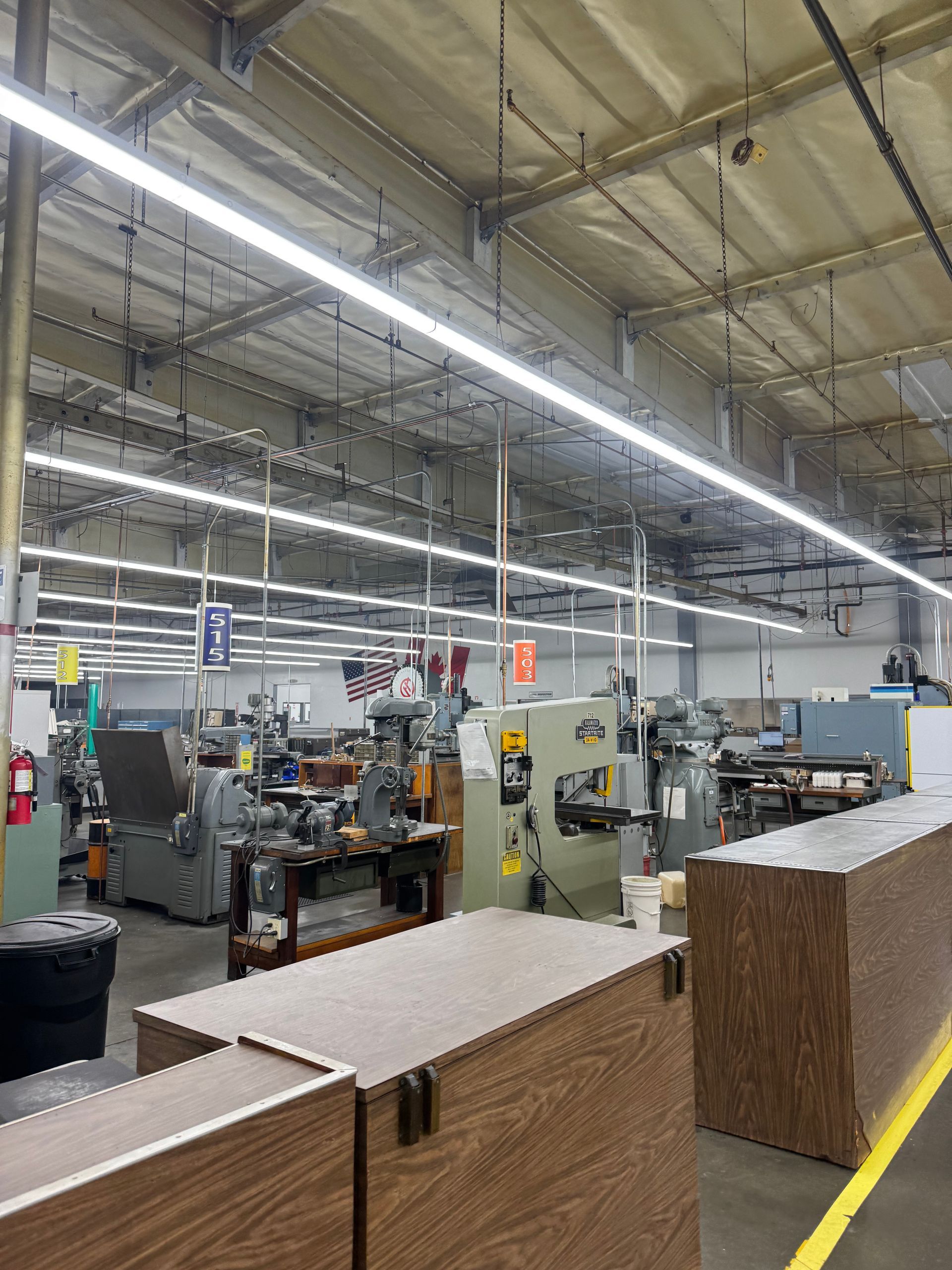
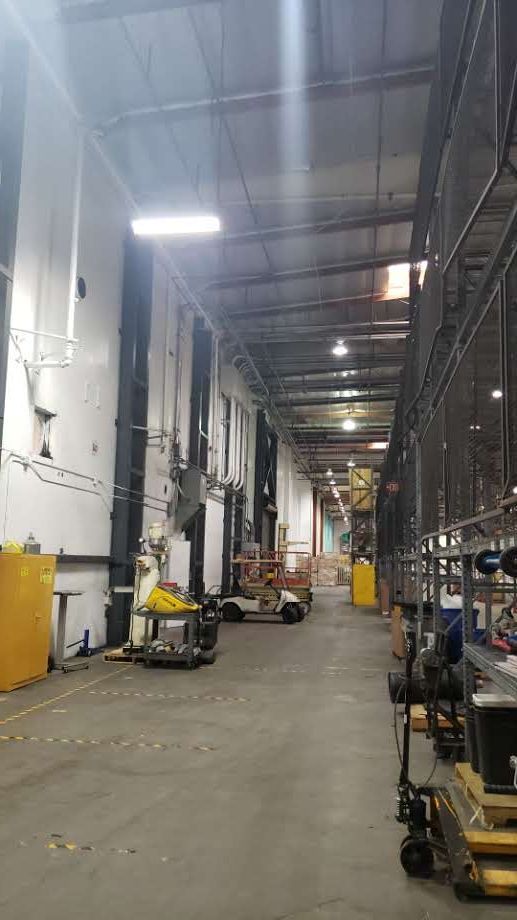
High-bay LED fixture installation, aisle and dock lighting, emergency egress systems, and full warehouse rewiring for distribution centers and industrial facilities throughout the San Fernando Valley.
LED track lighting, recessed downlights, display case and showcase lighting, signage circuits, and full storefront retrofits along Ventura Blvd, Sepulveda Blvd, and commercial corridors across LA.
Tenant improvement electrical, dedicated circuits, LED troffer retrofits, exit and emergency lighting compliance, and full panel upgrades for office buildings and commercial tenants throughout Los Angeles.
Dedicated circuits for medical equipment, procedure room lighting, UPS-backed outlets, emergency generator connections, and lighting upgrades for medical, dental, and clinical facilities throughout the Valley.
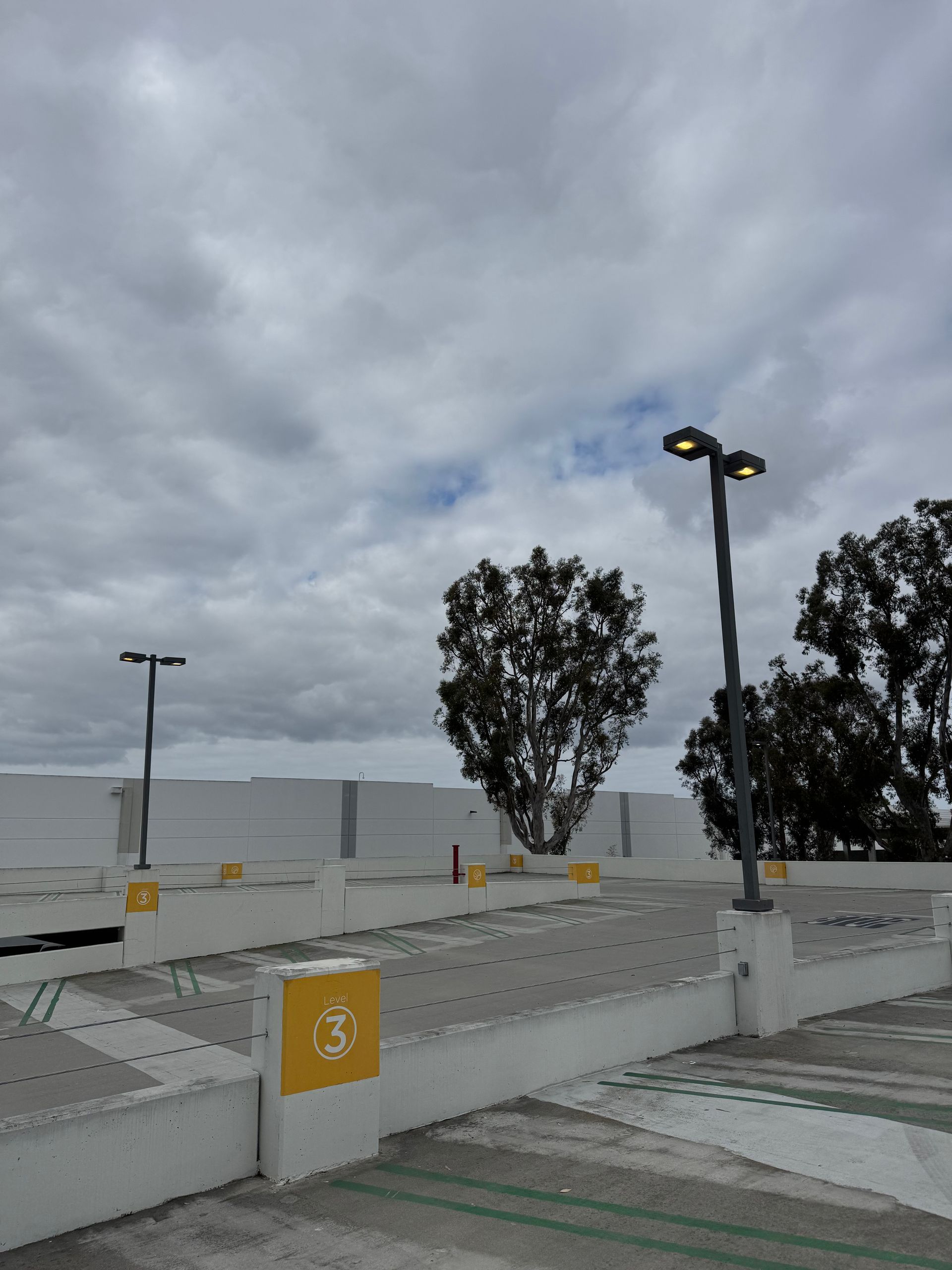
Parking lot pole LED replacements, canopy and soffit lighting, security and perimeter lighting, photometric studies, and LADBS-permitted site electrical for commercial properties and multi-family complexes.
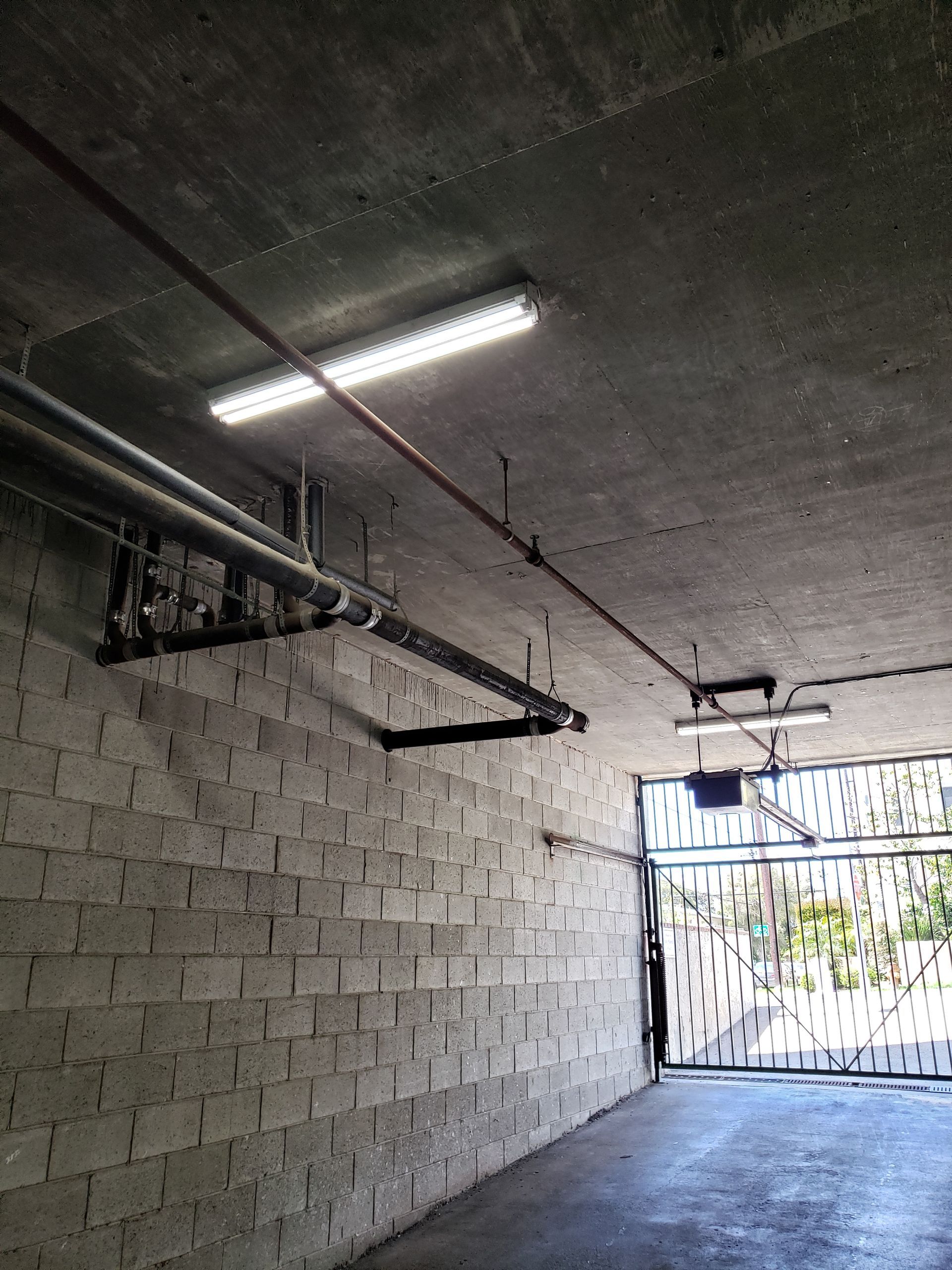
Common area LED upgrades, parking structure lighting, EV charging infrastructure, panel replacements, and meter center work for mixed-use developments and apartment complexes throughout greater Los Angeles.
What We Do
Full scope of commercial and industrial electrical work — from a single storefront LED retrofit to a complete warehouse overhaul. All work LADBS-permitted. All pricing transparent.
Commercial panel replacements, sub-panel installations, and service entrance upgrades for businesses throughout the San Fernando Valley. LADBS permits, LADWP coordination, and final inspection included.
Electrical ServicesLevel 2 and DC fast charger installation for commercial parking lots, office buildings, retail centers, and apartment complexes. Multi-vehicle systems with load management and all required sub-panels included.
EV Charger InfoInterior LED lighting for commercial spaces — recessed downlights, track lighting, LED troffers, display case lighting, and specialty fixture installation for storefronts, offices, and retail throughout LA.
Interior LightingFull commercial LED conversion from fluorescent, metal halide, and HID — including warehouse high-bays, parking lot poles, storefront canopies, and office troffers. SCE rebate paperwork included on every job.
Commercial LightingComplete commercial and multi-family building rewiring for aging or code-deficient electrical systems. All work permitted through LADBS or the applicable jurisdiction — no open walls left uninspected.
Electrical ServicesPanel upgrades, sub-panel installation, circuit runs, and all required electrical for ADU and garage conversion projects throughout the San Fernando Valley. LADBS permits handled on every job.
Electrical ServicesLutron Vive and RadioRA commercial lighting control systems, smart dimming, occupancy sensor integration, and daylight harvesting for offices, retail, and hospitality spaces throughout greater LA.
Interior LightingLow-voltage landscape lighting, pathway systems, architectural uplighting, and perimeter security lighting for commercial campuses, hospitality properties, and mixed-use developments throughout the Valley.
Interior LightingDedicated clean power circuits, isolated grounds, conduit design for acoustic walls, and specialty studio lighting installation for recording studios and post-production facilities throughout Los Angeles.
Studio ElectricalFull rough-in and trim-out electrical for new commercial construction, tenant build-outs, and ground-up development throughout the San Fernando Valley and greater LA. All jurisdictions permitted and inspected.
Electrical ServicesCommercial solar system wiring, battery storage installation, generator interconnects, and backup power systems for businesses throughout Los Angeles. Utility interconnection and all permits included.
Electrical ServicesCommercial electrical emergencies handled 24 hours a day, 7 days a week — zero overtime charges for nights, weekends, or holidays. Based in Van Nuys, we reach most Valley commercial properties in 20–30 minutes.
Call NowHow It Works
From first call to final inspection — no surprises, no subcontractors, no change orders.
No call centers. Jorge answers directly at (818) 588-7819. Describe your project and we schedule a site visit — usually same day or next morning.
We assess your space, calculate your SCE rebate eligibility, and deliver a written estimate with full scope and fixed pricing within 24 hours of the site visit.
LED Guys handles all LADBS permit applications, plan check submissions, and LADWP coordination. We schedule work around your business operating hours — nights, weekends, and holidays at no extra charge.
All commercial jobs close with a passed city inspection. For qualifying LED projects, we file your SCE rebate paperwork immediately after completion — reducing your net project cost automatically.
Our Work
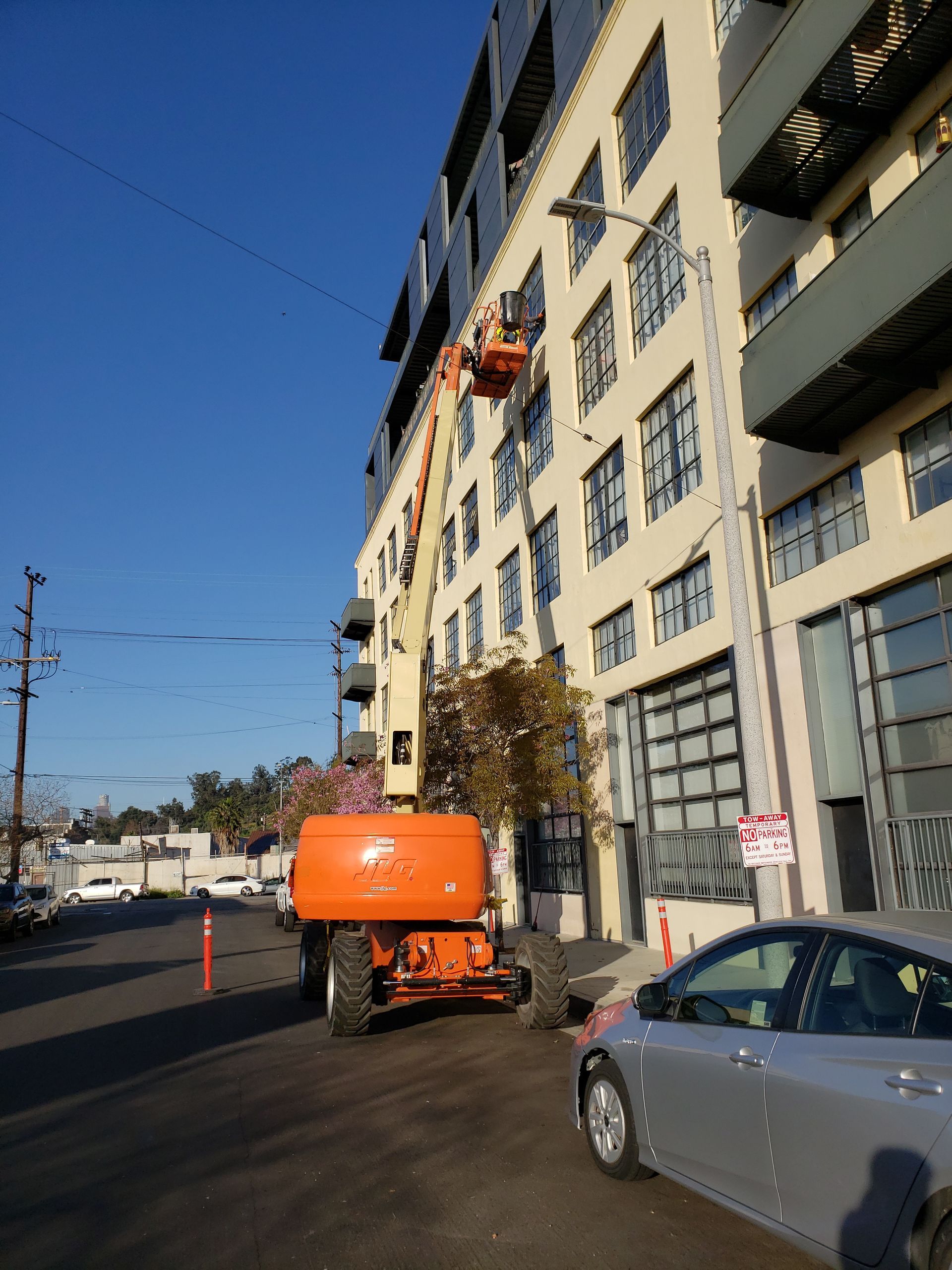
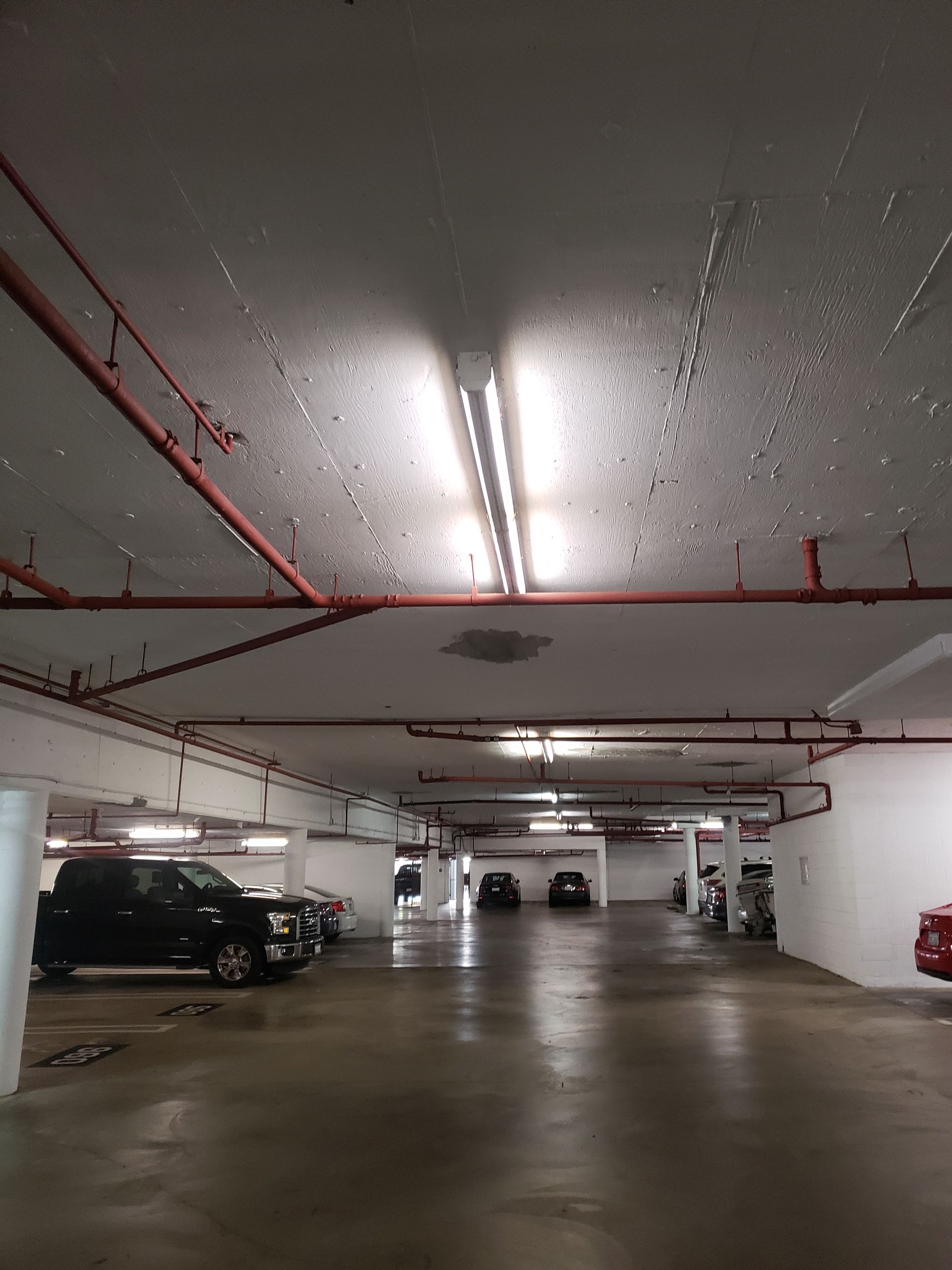
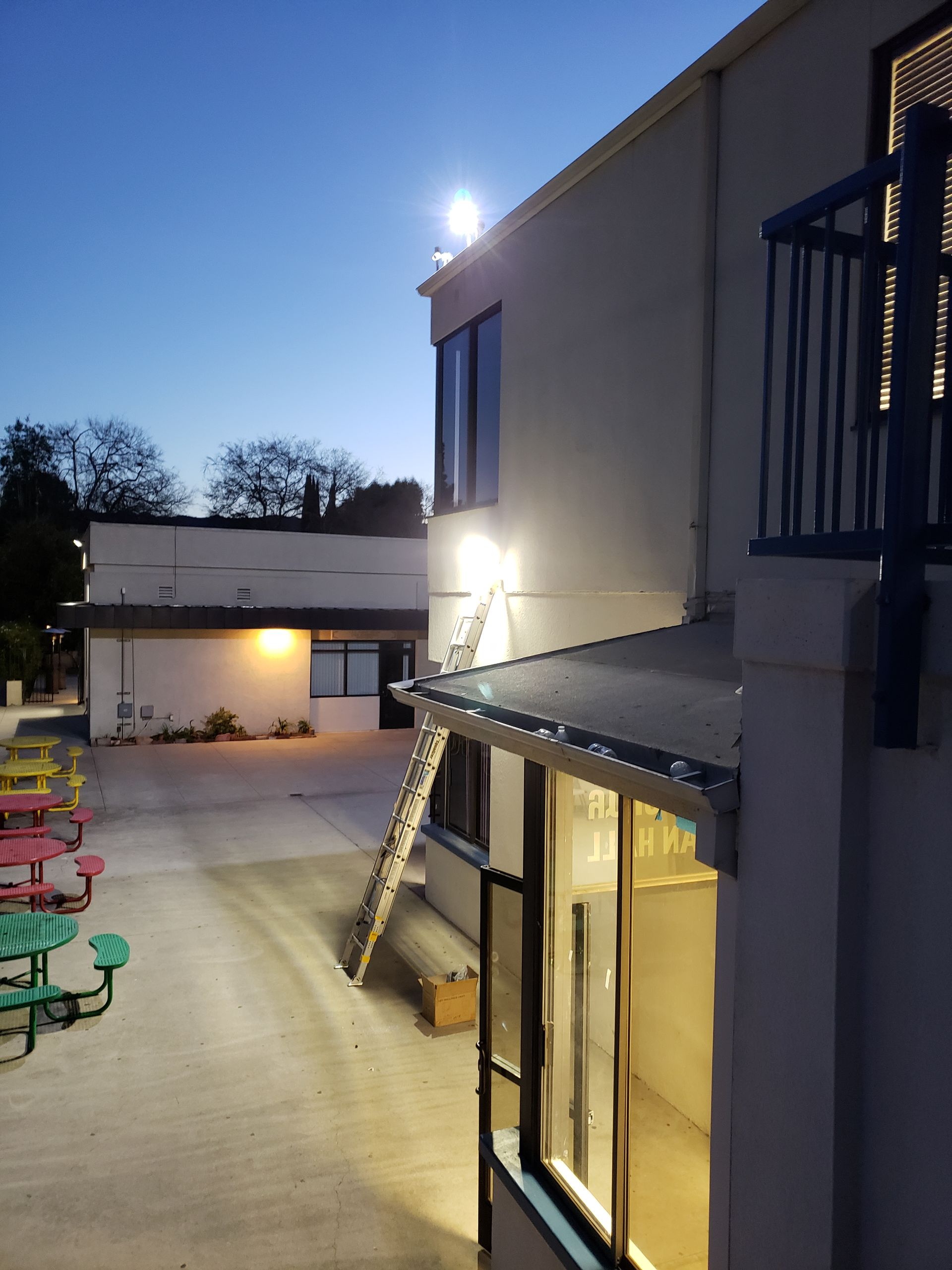
Real projects completed by LED Guys across warehouses, storefronts, offices, and commercial properties throughout the San Fernando Valley.
Common Commercial Problems
If your business property is showing any of these warning signs, call LED Guys for a free assessment. Many issues qualify for same-day service.
Legacy fluorescent and metal halide lighting can consume 3 to 5 times more energy than equivalent LED systems. An LED retrofit typically pays for itself within 18 to 36 months and qualifies for SCE rebates that accelerate the payback significantly.
Flickering lights in commercial spaces often indicate failing ballasts, loose wiring, or overloaded circuits. Left unaddressed, these conditions increase fire risk and violate CA electrical code. LED Guys diagnoses and corrects all fixture and wiring issues with same-day availability.
Repeated tripped breakers are a clear sign that your commercial panel is undersized for your current load — especially common in older Valley buildings. LED Guys handles commercial panel upgrades through LADBS with LADWP coordination and zero downtime surprises.
California mandates are accelerating EV adoption. Commercial properties without EV charging infrastructure are increasingly at a leasing and competitive disadvantage. LED Guys designs and installs multi-port Level 2 and DC fast charging systems for commercial parking lots and garages.
Inadequate exterior lighting creates liability risk and deters customers. LED Guys replaces aging parking lot poles, adds canopy lighting, and performs photometric studies to ensure full, even coverage that meets City of LA lighting ordinances and insurance requirements.
Commercial properties receiving code notices or failing city inspections need a licensed C10 contractor immediately. LED Guys reviews violation notices, corrects deficiencies, pulls the required LADBS or LA County permits, and coordinates re-inspection — all with a fixed quoted price.
What Clients Say
Real reviews from real clients — businesses, shops, and property owners throughout the San Fernando Valley and Los Angeles.
"I recently hired Jorge to install LED strip lights for my custom cabinets, and I couldn't be happier. Professional, punctual, and incredibly skilled. The wiring was neatly hidden and the setup works seamlessly. Highly recommend for anyone looking for top-notch electrical work."
"Very knowledgeable and punctual. Easy to work with and reasonably priced. I will definitely use them in the future for all my lighting and electrical needs."
"Jorge is the man for any electrical work. He completed lighting installations for my shop and did an excellent job. Professional, efficient, highly satisfied. I highly recommend Jorge for any electrical issues or projects."
"You can't ask for a better electrician than George. He's reliable, communicative, on time, reasonably priced and a pleasure to work with. I've called George for multiple projects, including panel upgrades, recess lighting and even technical issues and he has performed like a champion every time."
"I've worked with many electricians over the years, and he's by far the best. His prices are great, he's always on time, reliable, and gets the job done without any issues. If you need an electrician you can truly count on, reach out to him — you won't be disappointed."
"LED Guys were awesome! They replaced and repaired my open sub panel quickly and made the whole process super easy. Friendly, professional, and explained everything in a way that made sense. Great to have peace of mind knowing the job was done right."
LED Guys is based at 6641 Kester Avenue in Van Nuys — centrally positioned to reach commercial properties across all of the San Fernando Valley and greater Los Angeles quickly for both scheduled projects and emergency calls.
Commercial Electrical Guide
What every business owner, property manager, and commercial tenant needs to understand about their building's electrical infrastructure — and when to call a licensed C10 commercial electrician.
The single most important distinction in commercial electrical systems is the difference between single-phase and three-phase service. Residential properties and most small storefronts receive single-phase 120/240V service — two "hot" conductors carrying 120 volts each to a shared neutral, providing either 120 volts for standard outlets or 240 volts for large appliances. This service configuration works adequately for lighting and moderate loads, but has fundamental limitations for motor-driven equipment and high-demand commercial applications.
Three-phase service — the standard for commercial and industrial properties throughout the San Fernando Valley — provides three conductors carrying power 120 degrees out of phase with each other. The most common commercial configuration in Valley buildings is 208Y/120V three-phase, which provides 120 volts between any hot conductor and neutral (for standard outlets and single-phase lighting) and 208 volts between any two hot conductors (for three-phase equipment and HVAC). Larger commercial and industrial facilities typically receive 480Y/277V three-phase, which delivers 277 volts line-to-neutral (standard for commercial fluorescent and LED troffer fixtures wired at 277V) and 480 volts line-to-line for large motors and industrial equipment.
For a San Fernando Valley business relocating into a new space, the incoming service voltage determines what equipment you can run, how your HVAC and refrigeration systems must be specified, and what your lighting infrastructure can support. LED Guys reviews service specifications as part of every commercial quote — a business that moves into a 208V building expecting to run equipment specified for 240V will have immediate operational problems.
Commercial LED lighting retrofits are frequently discussed in terms of energy savings, but the technology decision is considerably more nuanced than replacing fluorescent tubes with LED equivalents. A well-designed commercial LED lighting system addresses illumination levels (measured in foot-candles at the work plane), color rendering index (CRI — the accuracy with which the light renders colors compared to natural daylight), color temperature (the perceived warmth or coolness of the light in Kelvin), and lighting controls (occupancy sensors, daylight harvesting, scheduling, and dimming) as an integrated system.
Illuminance requirements vary dramatically by application. The Illuminating Engineering Society (IES) publishes recommended illuminance levels for different commercial tasks: general office work requires 30 to 50 foot-candles at desk level, food preparation surfaces require 50 foot-candles, assembly lines with fine detail work may require 100 foot-candles or more, and parking structures require a minimum of 5 foot-candles at floor level with specific uniformity ratios to eliminate dark spots. A warehouse retrofitted with fixtures selected for wattage reduction alone — without a photometric study — commonly ends up with dark aisles and bright spots directly under fixtures, creating both operational inefficiency and potential OSHA compliance issues.
Color rendering index (CRI) is particularly important for retail and food service applications. Standard warehouse-grade LED fixtures are typically specified at CRI 70 to 80 — adequate for warehouse picking operations but visually flat and unflattering for merchandise display or food presentation. Retail and restaurant applications should specify CRI 90 or higher fixtures, and food retailers specifically benefit from fixtures with enhanced R9 (saturated red rendering) values, which make produce, meat, and prepared foods appear fresher and more vibrant. LED Guys specifies fixtures by CRI and R9 value for every commercial food and retail project, not just by wattage.
Southern California Edison's Business Energy Advisor and Savings By Design programs offer cash rebates for commercial lighting upgrades, HVAC improvements, and energy management systems. For LED lighting specifically, the SCE rebate calculation is based on watts saved per fixture multiplied by a rebate rate — typically $0.05 to $0.20 per kilowatt-hour of annual energy savings, paid as a one-time lump sum after project completion and verification. On a typical 50,000-square-foot warehouse retrofit replacing metal halide high-bay fixtures with LED equivalents, the SCE rebate commonly falls in the $15,000 to $40,000 range depending on the specific fixtures replaced and the calculated energy savings.
To qualify for SCE rebates, the project must use fixtures on SCE's approved product list, the application must be submitted and approved by SCE before work begins (pre-approval is required for most programs), and a final inspection or verification visit confirms the installed fixtures match the approved application. LED Guys handles the full rebate process: pre-construction application submission, fixture specification to the approved list, installation, and post-installation verification documentation. The rebate check typically arrives 60 to 90 days after project completion and is paid directly to the property owner or the tenant depending on how the utility account is structured.
Beyond the rebate, the financial case for commercial LED retrofits rests on three numbers: the annual energy savings (watts saved multiplied by operating hours per year multiplied by the SCE commercial rate, currently averaging approximately $0.22 to $0.28 per kWh for most Valley businesses), the maintenance savings from reduced lamp replacement labor and material costs (LED fixtures typically carry 50,000-hour rated lifespans versus 10,000 to 15,000 hours for metal halide and 20,000 to 30,000 hours for fluorescent T8s), and the demand charge reduction. SCE's commercial rate structure includes both an energy charge (per kWh) and a demand charge (per kW of peak demand per month). LED fixtures draw less peak wattage than their predecessors, which directly reduces the demand charge — sometimes significantly in large facilities where lighting represents a major portion of total peak demand.
Commercial panel upgrades are among the most operationally sensitive electrical projects because they require a period of complete power interruption during the switchover from the old panel to the new one. For a business operating during the upgrade, this interruption must be planned with precision. LED Guys coordinates commercial panel upgrades to minimize operational impact: scheduling the power interruption during off-hours where possible, coordinating the LADWP meter pull and reconnection for the same day, and pre-staging all materials so the physical switchover time is as short as possible.
The engineering basis for a commercial panel upgrade is a load calculation per NEC Article 220 (residential and commercial) or Article 230 (service entrance conductors). For commercial projects, the calculation must account for continuous loads (operating for more than 3 hours continuously, which includes most lighting and HVAC), non-continuous loads, motor loads (at 125% of nameplate amperage for the largest motor plus 100% of all others), and the demand factors that the code allows for large multi-unit buildings and similar applications. The calculated load determines the required service entrance conductor size and the breaker amperage on the utility transformer — and a calculation error that results in an undersized service entrance creates problems that are expensive to correct after installation.
LED Guys performs load calculations on every commercial panel upgrade using the current NEC as adopted by California, documents the calculation in the permit submittal package, and sizes conductors and equipment to carry the full calculated load at the required temperature ratings. THHN/THWN-2 conductors rated at 90°C are standard for all commercial installations, sized for the 75°C column per NEC 310.15 unless the termination equipment is rated higher — a detail that affects conductor sizing and is frequently overlooked by contractors working from rule-of-thumb rather than code calculation.
California's commercial property EV charging requirements are accelerating. CALGreen Title 24 now requires that a specified percentage of new and significantly renovated commercial parking spaces be EV-capable (raceway and panel capacity installed and ready), and the Air Resources Board's Advanced Clean Cars II regulation — which phases out new ICE vehicle sales by 2035 — guarantees that EV charging demand at commercial properties will grow substantially through the next decade regardless of what any individual business operator expects today.
For a commercial property investing in EV charging infrastructure today, the design decision that matters most is not how many chargers to install now — it is how much panel capacity and conduit infrastructure to install for the chargers that will be added over the next five to ten years. Running conduit and sub-feed conductors to all parking spaces at the time of the initial installation costs a fraction of what a second-phase installation costs after the parking lot is finished and landscaping is established. LED Guys designs commercial EV charging systems with future expansion built into the conduit and panel capacity, so the cost of adding chargers later is limited to the charger hardware and branch circuit wiring — not trenching, conduit, and panel work done twice.
For commercial properties where panel capacity is a constraint, smart load management controllers — sometimes called energy management systems (EMS) or EV load management systems (EVLMS) — allow multiple chargers to share a limited power allocation by dynamically adjusting each charger's output based on real-time total site load. These systems are now required for certain commercial EV charging configurations under CARB's CALGreen rules and are increasingly specified by property owners who want to install more chargers than their current panel would otherwise support without a full service upgrade.
High-bay lighting — fixtures mounted 20 feet or more above the floor — is the dominant lighting application in the San Fernando Valley's substantial warehouse and light-industrial sector. The majority of Valley warehouses built before 2015 use metal halide or high-pressure sodium high-bay fixtures, technologies that are energy-intensive, slow to start (metal halide requires up to 5 minutes to reach full output after power interruption), and require periodic lamp replacement as output declines over the lamp's life.
Modern LED high-bay fixtures for warehouse applications are available in outputs from 100 watts to 400 watts and higher, with typical efficacies of 140 to 170 lumens per watt — compared to 90 to 115 lumens per watt for the best metal halide fixtures. A 400-watt metal halide high-bay producing approximately 36,000 lumens at the lamp can typically be replaced by a 200-watt LED high-bay producing the same 36,000 lumens delivered to the work plane — but that comparison requires a photometric study to verify actual foot-candle levels at floor height, because the optical design of the LED fixture (beam angle, lens optics, reflector design) determines how efficiently the fixture's output reaches the work surface.
OSHA requires that warehouse facilities maintain minimum illumination levels in specified work areas. General warehouse areas require a minimum of 5 foot-candles at floor level, but the Occupational Safety and Health Administration's standards are minimums — not design targets. Industry best practice for active picking operations is 20 to 30 foot-candles at floor level, which substantially reduces error rates and improves worker safety in facilities where employees are moving throughout the space with forklifts and pallet jacks. LED Guys performs photometric analysis using AGi32 or DIALux-compatible software and provides a rendered lighting plan showing predicted foot-candle levels throughout the facility before fixture selection is finalized.
Emergency lighting and illuminated exit signs are among the most frequently cited deficiencies in commercial building inspections throughout Los Angeles County. The California Building Code (CBC) Chapter 10 and the NFPA Life Safety Code 101 both require that commercial occupancies maintain functional emergency egress lighting capable of providing a minimum of 1 foot-candle at floor level along the means of egress for a minimum of 90 minutes following loss of normal power. Exit signs must be continuously illuminated and clearly visible at all times.
The practical requirement is that emergency lighting systems — whether individual battery backup fixtures, a central battery inverter system, or a generator — must be tested monthly (a 30-second functional test) and annually (a 90-minute full-discharge test), with test records maintained on-site for inspection. Fluorescent emergency fixtures with lead-acid battery packs commonly fail this test in buildings where the monthly and annual testing has been neglected, as the battery degrades over time without the periodic cycling that maintains capacity. LED emergency fixtures with sealed lead-acid or lithium batteries generally have longer battery service lives, but still require the code-required testing schedule.
LED Guys installs, tests, and documents emergency lighting systems for commercial clients throughout the Valley, and provides the testing log documentation that building inspectors and insurance carriers request. For businesses that have received a fire marshal or building inspector notice regarding emergency lighting deficiencies, LED Guys provides same-day assessment and a written quote for correction before the re-inspection deadline.
Commercial tenant improvement (TI) electrical work encompasses everything from adding dedicated circuits for office equipment to completely rewiring a space for a new restaurant or medical use. The scope of TI electrical work is driven by three factors: the existing electrical infrastructure in the space (panel location, service amperage, circuit layout, lighting infrastructure), the new tenant's load requirements and equipment specifications, and the applicable code requirements for the new use and occupancy classification.
A change in occupancy classification — for example, converting a retail space (Group M) to a restaurant (Group A-2) — triggers a full code review under the CBC that can require upgrades well beyond what the new tenant might expect. Restaurant occupancies have significantly more stringent egress, emergency lighting, ventilation, fire suppression, and electrical requirements than retail. The Type 1 hood above commercial cooking equipment requires a dedicated exhaust fan circuit, fire suppression system control wiring, and in many cases an emergency shunt-trip breaker that cuts power to all cooking equipment when the hood suppression system activates. LED Guys works with TI general contractors throughout the Valley and manages the electrical scope from permit submittal through final inspection sign-off.
For medical and dental office TIs, the electrical requirements are substantially more complex than standard commercial occupancy. California's OSHPD (Office of Statewide Health Planning and Development) regulates licensed healthcare facilities, but dental offices and many medical group practices that are not licensed healthcare facilities fall under local building department authority. Regardless of jurisdiction, medical and dental TIs typically require dedicated isolated ground circuits for sensitive diagnostic equipment, specific circuit configurations for imaging equipment and laser systems, appropriate fault protection for patient care areas, and in some cases uninterruptible power supply (UPS) connections for critical equipment. LED Guys designs and installs medical and dental TI electrical to the required specifications, coordinating with the equipment vendors' installation requirements to ensure that circuit sizing, grounding, and conduit routing meet both code and equipment warranty requirements.

Exterior and parking lot lighting for commercial properties in Los Angeles County is governed by both the California Energy Code (Title 24 Part 6) and local ordinances that specify maximum illuminance levels to control light pollution in residential neighborhoods. The City of Los Angeles Outdoor Lighting Standards in LAMC 93.0117 set specific footcandle limits at property lines in residential zones — which matters for Valley commercial properties that back up to residential streets. Getting the photometrics wrong in either direction — insufficient lighting for safety, or excessive spill at the property boundary — creates problems at LADBS inspection that require fixture replacement before occupancy can be granted.
From a liability standpoint, inadequate parking lot lighting is a well-documented premises liability risk. California courts have consistently held that commercial property owners have a duty to maintain safe conditions on their property, and inadequate lighting that contributes to a criminal incident or slip-and-fall creates significant exposure. Commercial property insurance carriers increasingly request photometric studies and inspection records when renewing policies for large multi-tenant commercial or retail properties. LED Guys provides photometric studies as part of the scope of every commercial exterior lighting project, with output documented in a format that satisfies both the LADBS plan check and insurance carrier requests.
Southern California's grid resilience has improved significantly since the deregulation era, but LADWP outages — particularly from equipment failures in aging distribution infrastructure and from PSPS (Public Safety Power Shutoff) events during high-wind conditions — remain a real operational risk for businesses that cannot tolerate downtime. For commercial properties, the options for backup power range from small portable inverter generators (adequate for IT equipment and minimal lighting in a small office) to permanently installed standby generators with automatic transfer switches capable of sustaining full building operations through multi-day outages.
The critical piece of every commercial backup power installation is the automatic transfer switch (ATS), which monitors utility voltage and frequency, initiates generator start on outage detection, waits for the generator to reach stable output, and then transfers the load to the generator — typically within 10 to 30 seconds for automatic standby systems. The ATS also handles the reverse transfer when utility power is restored, allowing the generator to cool down at no load before shutting down. A generator installed without a properly rated and listed transfer switch creates a back-feed hazard that endangers utility linemen working on the dead utility line — this configuration is both a code violation under NEC Article 702 and a criminal liability risk if utility workers are injured.
LED Guys installs both portable generator transfer switch panels (interlock kits and manual transfer panels that allow a portable generator to be safely connected without back-feed risk) and permanently installed automatic standby generator systems from 10kW to 150kW. Every installation is permitted through LADBS or the applicable local authority, uses a listed transfer switch, and includes a LADWP coordination letter confirming that the installation meets utility interconnection requirements. Generator installations also require an airspace clearance check for natural gas supply adequacy — LED Guys coordinates with the licensed plumber for the gas line sizing rather than leaving this to the owner to arrange separately.
Commercial building inspectors and fire marshals conducting routine inspections throughout the San Fernando Valley cite certain electrical deficiencies repeatedly. Understanding these common violations helps property owners and tenants identify and correct issues before they become citations with mandated correction deadlines.
Open knockouts in electrical panels and junction boxes allow rodents, insects, and personnel contact with energized buses and wiring. NEC 110.12 requires that unused openings in electrical equipment be closed. Fire marshals cite this frequently in older Valley commercial buildings where knockouts have been removed and not sealed after conduit relocations.
NEC 230.70 and 240.24 require that electrical panels be accessible without moving stored materials, and that overcurrent devices (breakers) be accessible to the occupant. Junction boxes covered by ceilings, stored equipment, or shelving violate NEC 314.29. LED Guys relocates panels and junction boxes to compliant, accessible locations as part of TI electrical projects.
Commercial kitchens, janitor closets, bathroom circuits, and outdoor outlets require GFCI protection under NEC 210.8(B). Many older commercial spaces have non-GFCI outlets in these locations that predate code requirements. These are straightforward to correct with GFCI receptacle or breaker replacement, but generate citations when identified during inspection.
Multi-wire branch circuits (MWBC) — two hot conductors sharing a neutral — are common in commercial wiring but require a handle-tie or two-pole breaker to ensure both conductors open simultaneously during maintenance. Improperly installed MWBCs create a shock hazard for electricians servicing the circuit. NEC 210.4(B) mandates simultaneous disconnection for all conductors of an MWBC.
Metal raceways, equipment enclosures, and motor frames require a continuous equipment grounding conductor connecting back to the panel's grounding bus. Missing or improperly bonded equipment grounding creates shock hazard and prevents the overcurrent device from clearing a ground fault. This is particularly common in older commercial buildings where equipment has been added or relocated without pulling a proper ground.
NEC 408.4 requires that every circuit breaker in a panel be legibly identified as to its purpose or the equipment it serves. Unlabeled or mislabeled breakers are cited in virtually every older commercial building inspection. LED Guys labels every panel circuit during any panel upgrade or TI project and provides a completed panel directory in the permit closeout package.
Common Questions
Answers to the questions we hear most from businesses and property managers throughout the San Fernando Valley.
Call Jorge directly — same-day availability throughout the San Fernando Valley and greater Los Angeles. LED retrofits, panel upgrades, warehouse lighting, tenant improvement, EV charging — we handle the full commercial scope.
The Tesla Energy Certified Installer designation identifies professionals who have completed Tesla Energy training, hold deep technical knowledge of Tesla Energy products, and deliver the highest-quality installations for Tesla customers. LED Guys holds this certification for both product lines — a combination very few Los Angeles electricians can offer.
LED Guys is certified by Tesla Energy to install the Tesla Wall Connector and Universal Wall Connector to Tesla's own installation standards. That certification covers the full scope of a residential or commercial Wall Connector project: conductor sizing per NEC Article 625, dedicated circuit breaker selection, conduit and wire routing, GFCI breaker protection per NEC 625.54, and proper grounding and bonding at the panel.
After the physical installation, Jorge commissions the Wall Connector through the Tesla One app — connecting the unit to Wi-Fi, registering it to your Tesla account, setting the output amperage to match your circuit, and configuring access controls if you want to restrict charging to authorized vehicles. For multi-vehicle homes and commercial sites, we configure Power Sharing so up to six Wall Connectors intelligently share a single circuit without exceeding its capacity.
The Wall Connector delivers up to 48 amps on a 60-amp circuit, the fastest Level 2 charging Tesla offers for home use. Its built-in amperage adjustment (12, 16, 24, 32, 40, or 48 amps) means it works with any panel — from a 100-amp service with limited headroom to a 400-amp commercial main. Tesla's NACS connector is now the North American charging standard (SAE J3400), so the Wall Connector charges Teslas natively and other EV brands via adapter or native NACS port. The Universal Wall Connector adds a built-in J1772 connector for households with mixed EV brands.
Certified for Tesla Powerwall home battery installations — whole-home backup, Backup Gateway integration, solar coordination, and Charge on Solar setup so your Tesla charges from excess solar production automatically.
Powerwall installations include gateway wiring, backup circuit selection based on your household's critical loads, and utility interconnection paperwork for LADWP net metering. Jorge configures Storm Watch, self-consumption mode, and time-based control through the Tesla app so your system responds automatically to grid conditions and rate schedules.
LED Guys is a GlowbackLED Trusted Lighting Installer — a designation earned by electrical contractors who consistently deliver high-quality installations of GlowbackLED's custom LED lighting systems. GlowbackLED is a US-based designer and manufacturer of architectural LED solutions: custom LED panels, recessed and pendant linear fixtures, LED aluminum channels, and cabinet lighting built to specification for high-end residential and commercial projects.
When a project calls for custom-fabricated LED lighting — a coffered ceiling with built-in linear channels, back-lit niches, under-cabinet strip lighting with dimmer controls, or a commercial lobby with signature pendant fixtures — Jorge sources components from GlowbackLED and installs them to their technical specifications. Every GlowbackLED installation includes proper driver placement, dimmer compatibility verification, and clean concealed wiring so the finished result matches the design intent.